
Weekend Project: Build a Classic Cedar Adirondack Chair for Under $150
A step-by-step guide to building a comfortable, durable Adirondack chair. Perfect for intermediate woodworkers looking to upgrade their patio.

There is something timeless about the Adirondack chair. It represents the perfect intersection of form and function—wide armrests for your drink, a slanted seat for relaxation, and a design that looks good in any garden.
I’ve built dozens of these over the years, and I’ve refined a design that balances comfort with ease of construction. In this guide, I’ll walk you through my process for building a chair that will last for decades.
Choosing Your Lumber
For outdoor furniture, you really have three main choices:
- Cedar: My personal favorite. It resists rot naturally, smells great, and turns a beautiful silvery-gray if left untreated.
- Cypress: A great alternative to cedar, often cheaper in the South.
- Pressure Treated Pine: The budget option. It works, but it’s heavy and tends to warp.
For this project, I’m using Western Red Cedar. It’s lightweight and holds up incredibly well against the elements.
Step 1: Making the Templates
The secret to a uniform set of chairs is templates. Don't try to measure and draw every curve on every board. Draw it once perfectly on ¼" MDF or plywood, cut it out, and sand the edges smooth.
Use this template to trace your pieces onto the cedar.
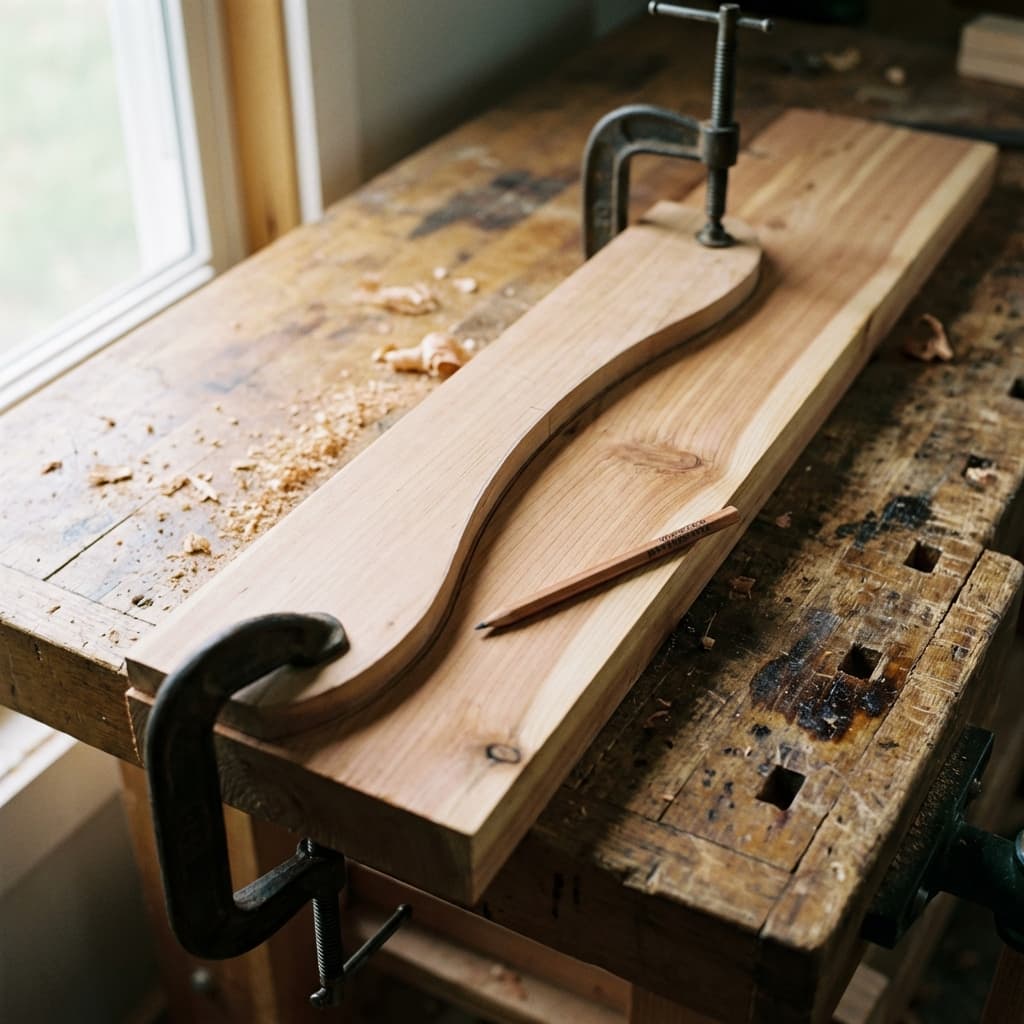
The Critical Curves
- The Side Rails: These support the seat slats. The curve here determines how far back you lean.
- The Armrests: Make them wide enough (at least 5.5 inches) to hold a coffee mug comfortably.
Step 2: Cutting and Sanding
Once traced, cut your curved pieces. A bandsaw is ideal, but a jigsaw with a scrolling blade works perfectly fine.
Pro Tip: Cut just outside the line (about 1/16"), then sand down to the line. This gives you a much smoother edge than trying to cut perfectly on the line.
Sand all faces to 120 grit. Don't go finer than that for outdoor projects, or you'll close the wood pores too much, making it harder for finishes to penetrate.
Step 3: Assembly Strategy
I always start with the base frame: the two side rails and the front legs. Use a flat surface to ensure everything sits square.
When attaching the seat slats, consistent spacing is key. I use a ¼" spacer (a scrap piece of plywood works great) between each slat. This allows for water drainage and expansion.
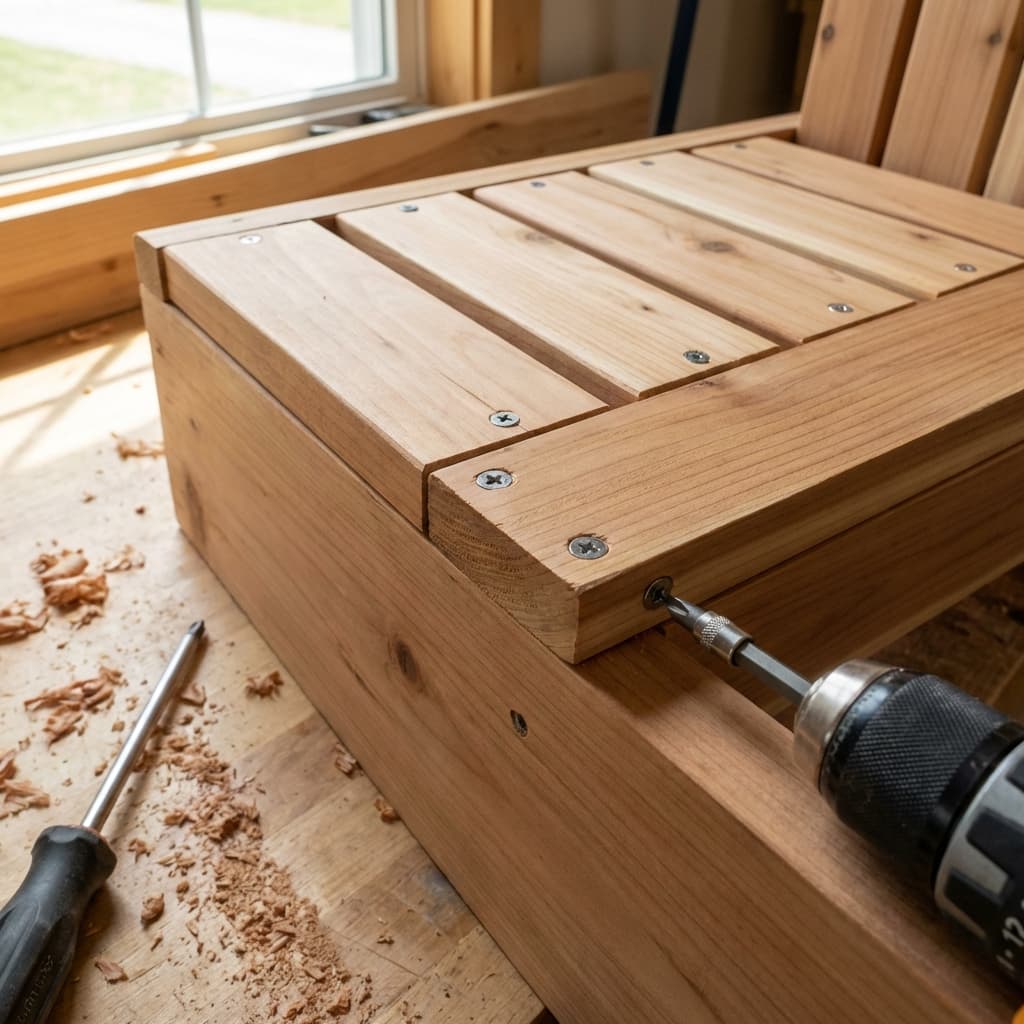
Fastener Choice
Do not skimp here. Use Stainless Steel Trim Screws.
- Why Stainless? Cedar contains tannins that react with regular steel (even coated deck screws eventually), causing ugly black bleeding stains.
- Why Trim Screws? They have small heads that sink cleanly into the wood, making them almost invisible without needing plugs.
Step 4: Finishing Touches
Once assembled, I like to soften every sharp edge with a ¼" roundover bit in my trim router. This makes the chair much more comfortable against the skin.
For finish, you can leave cedar raw, but I prefer a penetrating oil sealer to keep that rich red color for a few years.
The Result
Building your own furniture is about more than just saving money (though you will). It’s about sitting in a chair that fits you perfectly, knowing every screw and joint was placed with care.
This chair takes about a weekend to build, costs under $150 in materials, and will easily outlast anything you buy at a big box store.