
How a Regular Homeowner Completed a Professional Backyard Shed Over a Single Weekend — No Carpentry Degree Required
He almost bought a flimsy $3,800 plastic kit from Home Depot. Then he found a better way — and finished a professional-grade wood shed over a single weekend, start to finish.
Advertorial: This story reflects the personal experience of the author. We may receive compensation from the products mentioned.
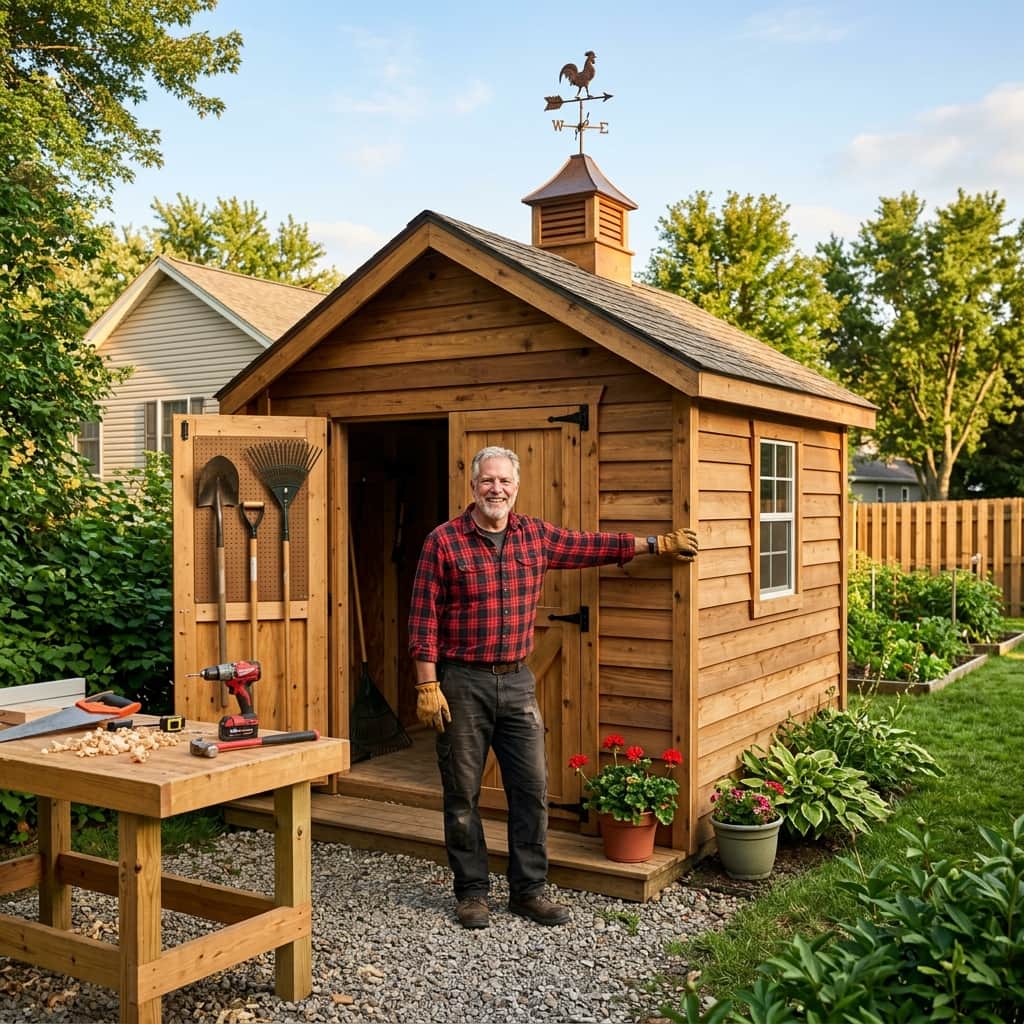
I almost drove to Home Depot and bought a plastic shed.
You've seen them. The big resin kits stacked near the garden center. The ones that look decent on the box but wobble like a TV stand when you push them in the store.
The price tag that day was $3,849. For a shed that a strong wind could rearrange.
I stood there for fifteen minutes doing the math in my head. Then I put the cart back, walked to my truck, and told myself: "I can build something better than this. I just need the right plan."
What I didn't know yet was that "the right plan" would make all the difference in the world.
The Real Reason Most DIY Sheds Never Get Finished
I'll be honest with you. I'd tried to build a shed before.
I found a free plan online, printed it out, and spent two Saturdays fighting with it before I gave up. Not because I'm not handy. I've been fixing things around the house for 25 years. I replaced my own water heater. I framed a basement wall.
But those free blueprints online? They're written for someone who already knows how to build a shed.
The dimensions were vague. The diagrams were tiny, flat, and confusing. There was no real materials list — just a rough estimate that left me standing in the lumber aisle guessing. On my second Home Depot run of the day, I bumped into a neighbor who asked how the project was going.
"It's... going," I said.
It wasn't going.
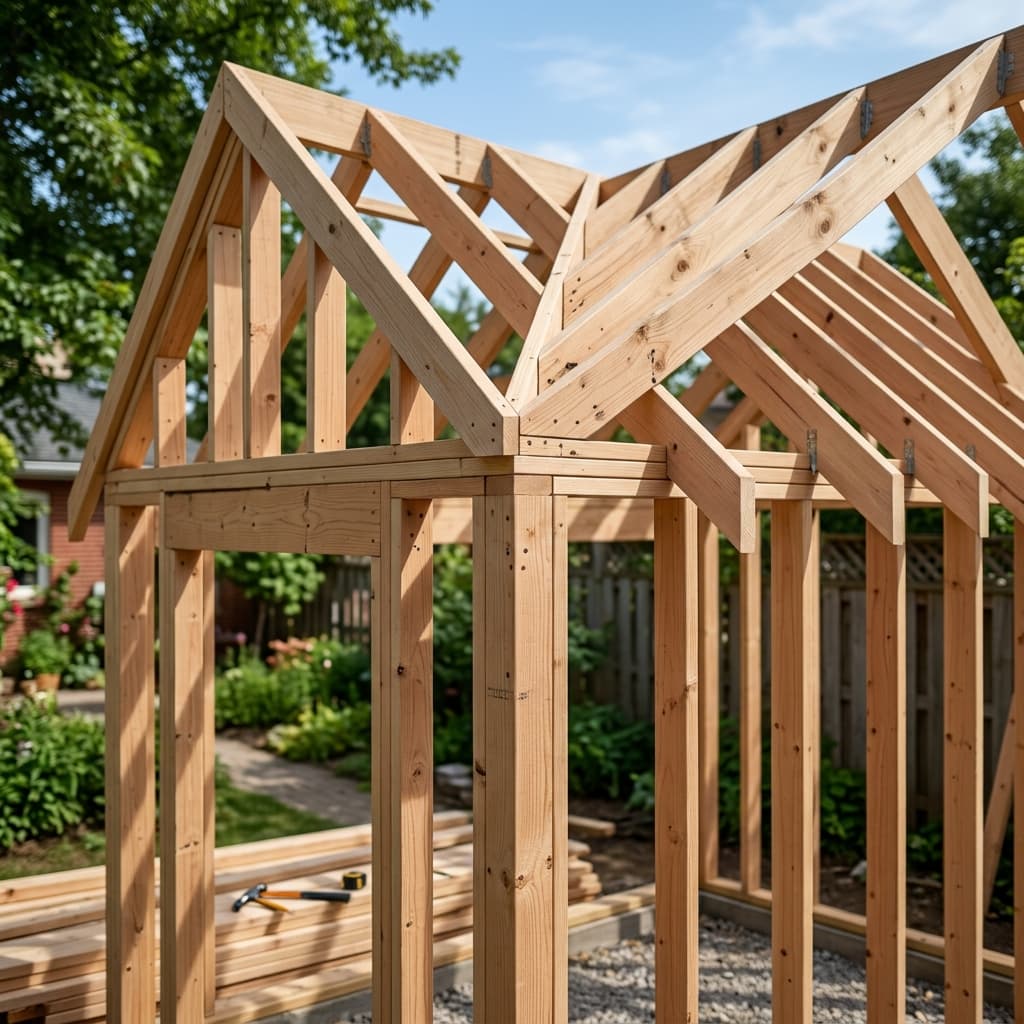
After two weekends, I had an uneven floor frame and a pile of mis-cut 2x4s that I didn't know what to do with. I'd spent $280 in lumber on a project I still couldn't visualize completing.
The Find That Changed Everything
A few weeks later, I was in a home improvement forum venting about my situation when someone replied with a simple message:
"Ryan's Shed Plans. 12,000 blueprints. $37. Just try it."
I was skeptical. Twelve thousand plans? That sounds like a sales number, not a real number. But I clicked the link anyway.
The price was $37. At that point, I'd wasted more than that on wood I couldn't use. So I bought it.
The moment I opened the first plan, I understood what I'd been missing.
These weren't sketches. They were step-by-step construction guides.
The difference hit me like a two-by-four to the forehead (figuratively, thankfully).
What Makes These Plans Different: 3 Things That Actually Matter
1. You Can See Exactly Where Everything Goes — Before You Cut a Single Board
Every plan in this library includes full 3D isometric views.
That means instead of staring at a flat, confusing top-down drawing and trying to imagine how it becomes a shed, you see the structure from every angle in three dimensions. You can see where each stud meets the plate. You can see how the roof truss sits. You can see exactly how the door frame ties into the corner post.
It's the difference between reading a map and using GPS.
I spent 20 minutes studying the 3D views before I touched a single piece of lumber. By the time I made my first cut, I could picture the finished shed in my head — every board, every angle, every connection.
✓ Full 3D isometric views
✓ Numbered assembly sequence
Each step is numbered so you always know what comes next. There's no guessing about the order of assembly or whether you missed a critical step.
✓ Pre-calculated angles for roofs and rafters
2. The "Zero-Waste" Material List — One Trip to Home Depot, Period
This is the one that saves you money and your sanity.
Every plan comes with a complete, itemized material list. Not "you'll need some 2x4s." The actual list.
- (14) 2x4x8 studs — wall framing
- (3) 4x8 sheets of 7/16" OSB — wall sheathing
- (1 box) #9 x 3" exterior structural screws — primary fasteners
You take that list to Home Depot, you buy exactly what's on it, and you come home with exactly what you need. No third trip for the hardware you forgot. No pile of leftover lumber sitting in the corner of your garage for three years.
Mark's Insider Tip
Print the material list before you ever set foot in the store. Hand it to the lumber associate and ask them to pull it for you. I saved 45 minutes on my first trip doing exactly this. The associates love a specific list — it means they don't have to guess either.
3. Built for Beginners — Standard Home Tools Are Enough
I did not rent a framing nailer. I did not need a track saw, a table saw, or a laser level.
Here's the complete tool list I used to build my 10x12 shed:
- Circular saw
- Drill/driver
- Measuring tape
- 4-foot level
- Speed square
- Chalk line
That's it. Every one of those tools has been sitting in my garage for years. The plans are designed around what a normal homeowner actually owns — not around a professional contractor's truck full of specialty equipment.
This is what "beginner-friendly" actually means when someone gets it right.
What the Weekend Actually Looked Like
I'm going to be specific here, because I think the specifics are what convince you this is real.
Friday evening (2 hours): I picked the plan, read through it completely once, and made my material list. I already had most of the tools.
Saturday morning (1 hour): One trip to Home Depot. I spent exactly $611 on materials — lumber, OSB, hardware, and roofing. No second trip.
Saturday (8 hours): I cut all my lumber following the cut list, built the floor frame, and stood up all four walls. By 4pm, my shed had four walls and no roof yet — the structure was coming together exactly as planned.
Sunday (6 hours): Roof trusses (which I had been dreading) went together in two hours because every angle was already calculated. By 3pm, I was nailing the last shingle.
Sunday evening: I put my tools away inside the shed. My tools. In my shed. That I built.
The total cost: $648, including the plans. The plastic kit at Home Depot was $3,849.
The Question I Keep Getting Asked
My brother-in-law saw the shed at a cookout and asked me who I hired.
I told him I built it myself, over a weekend, using a $37 set of plans.
He didn't believe me until I showed him the photos I took during the build.
Now he's building one too.
The plans aren't magic. You still have to do the work. But when you have a blueprint that shows you exactly what to do, in exactly what order, with exactly what materials — the work stops being intimidating and starts being satisfying.
That's the part nobody tells you about: when the plan is clear, the building process becomes much more manageable and satisfying.
If you've been looking for a way to start your own shed project, these digital plans provide a great starting point.
What You Get for $37
✓ 12,000 Shed & Woodworking Plans
✓ 3D Views + Step-by-Step Instructions
No ambiguous flat sketches. Full dimensional views so you see the project clearly before you pick up a single tool.
✓ Exact Material & Cut Lists
Buy only what you need. No waste, no guesswork, no five extra trips to the store.
✓ Lifetime Access + Instant Download
Start Planning Your DIY Shed Project Today
Get instant access to this digital library of 12,000 shed blueprints today for a one-time investment of $37 (Regular Price $97). No monthly fees. These are downloadable PDF files, not a physical kit.
- 12,000 Digital Blueprints: A comprehensive collection of designs ranging from tool sheds to workshops.
- 3D Isometric Diagrams: Visual guides designed to show assembly details clearly before you start.
- Itemized Material Lists: Designed to help you purchase exactly what you need at your local lumber yard.
Disclaimer: Project completion times and results vary based on the complexity of the plan selected, individual skill level, and available tools. The $37 price is for a one-time digital access license to the plan database.