
The Ultimate Table Saw Safety Guide for Beginners
The table saw is the heart of the workshop, but it bites if you don't respect it. Learn the essential safety rules to keep your fingers intact.
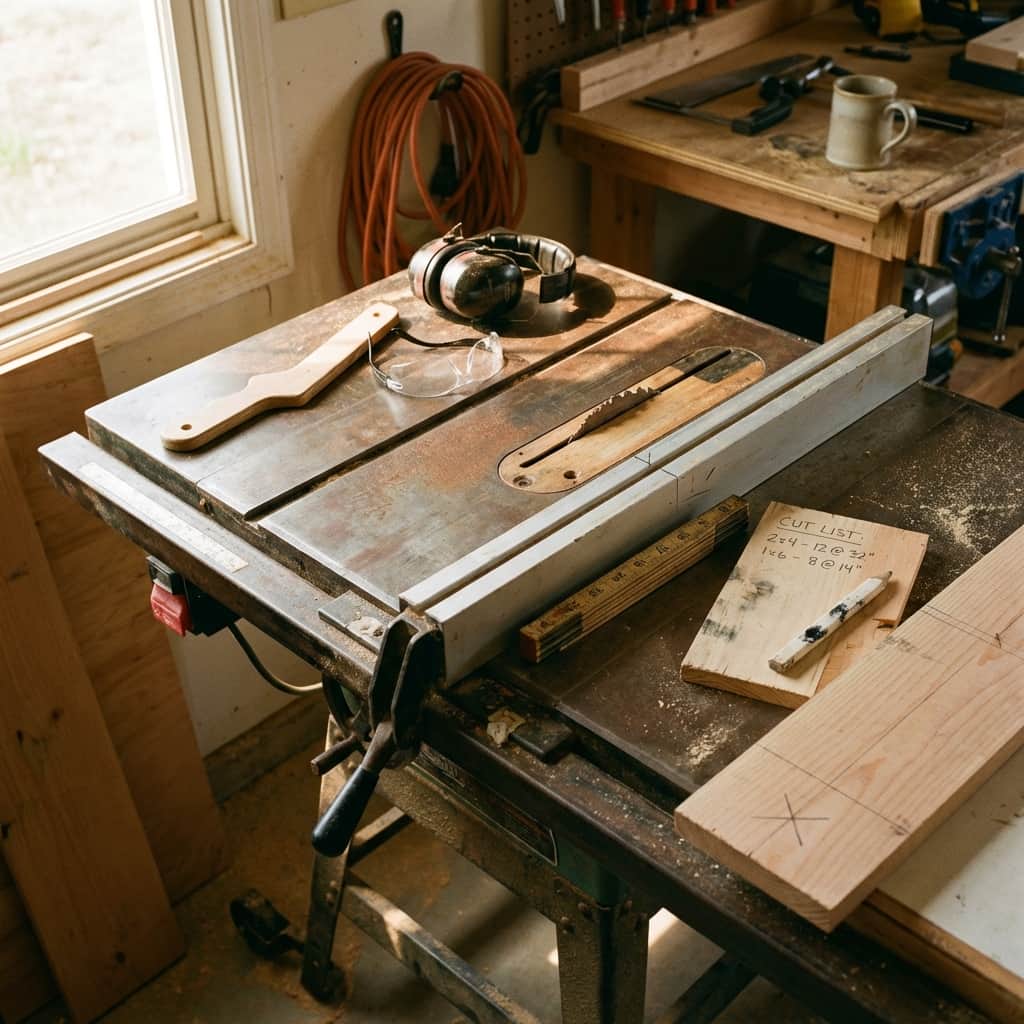
The Heart of the Shop (and the Beast)
The table saw is arguably the most useful tool in a woodworker's arsenal. It rips, it crosscuts, it cuts joinery. It's the center of the workshop universe.
It is also statistically the most dangerous.
Every year, thousands of woodworkers end up in the ER because of a moment of distraction. But here is the good news: Table saw accidents are almost 100% preventable.
They don't happen by "bad luck." They happen because physics laws were ignored. If you understand how the machine works—and more importantly, how it wants to throw wood back at you—you can use it safely for a lifetime.
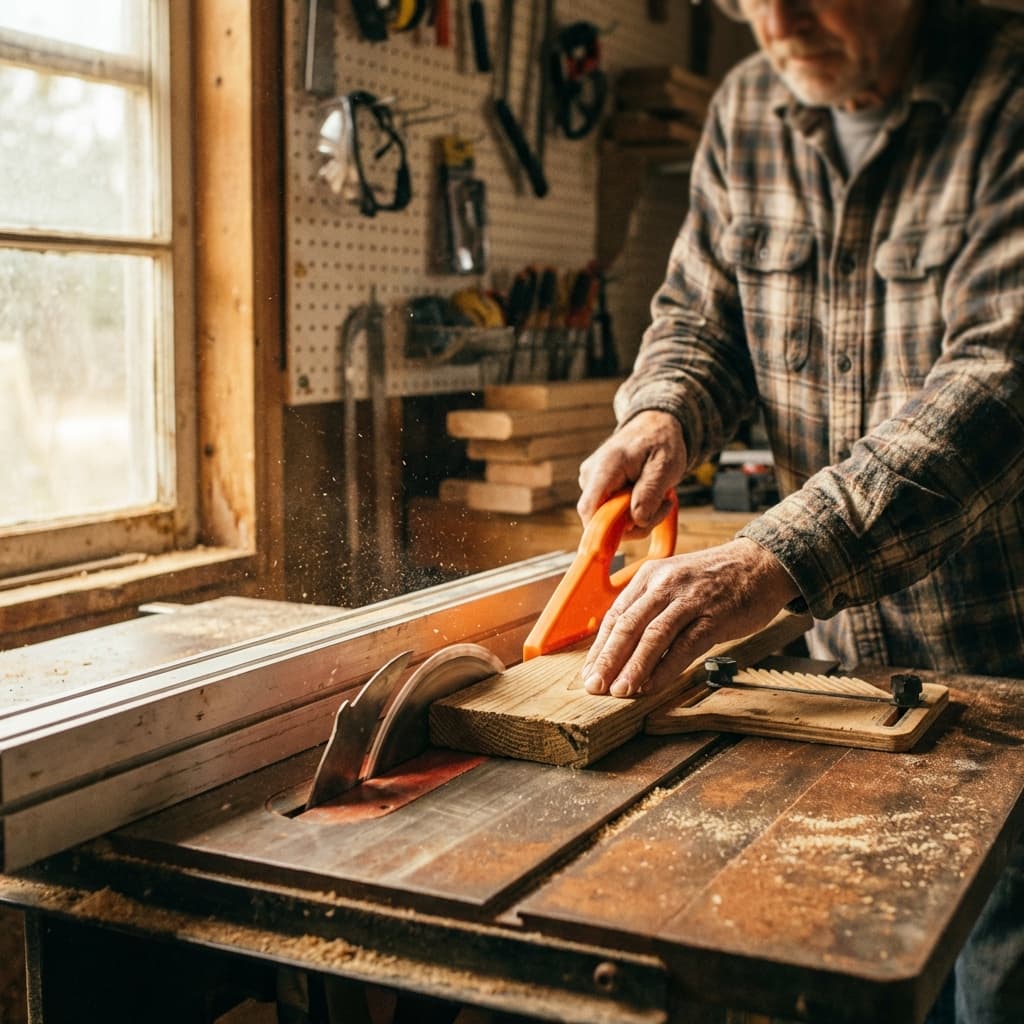
Understanding the Enemy: Kickback
The number one cause of injury isn't touching the blade directly; it's kickback.
Kickback happens when the piece of wood you are cutting gets pinched between the back of the spinning blade and the rip fence. The rear teeth of the blade lift the wood up and throw it back at you at over 100 mph.
This can shatter your hand, break your ribs, or pull your hand into the blade faster than you can blink.
The "Line of Fire": Never stand directly behind the blade and the workpiece. Stand to the left of the blade (if using a standard saw). If kickback happens, the wood should fly past your hip, not through it.
How to Prevent Kickback
- Use a Riving Knife: This is a metal fin behind the blade. It keeps the cut (kerf) open so the wood can't pinch the blade. Never remove it.
- Align Your Fence: If your fence isn't perfectly parallel to the blade (or slightly toed-out), it acts like a funnel, pinching the wood against the back of the blade.
- Never Freehand: Always use the fence OR the miter gauge. Never both (more on this below).
Essential Safety Gear
You can't rely on reflexes. You need physical barriers.
1. The Push Stick
If your hand is within 6 inches of the blade, use a push stick. Period. Don't use those flimsy plastic ones that come with the saw. They can slip.
Make Your Own Push Block: A "shoe" style push block (like the Grr-ripper or a homemade wooden one) is safer. It puts pressure down on the table, in against the fence, and forward through the cut. This control prevents kickback before it starts.
2. Eye and Ear Protection
Standard. Wood chips fly fast. Just wear them.
3. No Gloves / No Loose Sleeves
This is counter-intuitive. You wear gloves for yard work, right? NEVER wear gloves at the table saw. If the fabric catches a spinning tooth, it will pull your hand in. You want your skin to slip off or get a knick, not get de-gloved. Roll up your sleeves.
The Two Types of Cuts (And Where People Fail)
Ripping (Cutting with the grain / Lengthwise)
- Rule: Use the Rip Fence.
- Danger: wood pinching the blade. Use your riving knife and push stick.
Crosscutting (Cutting across grain / Shortening a board)
- Rule: Use the Miter Gauge or a Crosscut Sled.
- Danger: Using the Rip Fence as a stop block.
The "Trap": If you use the miter gauge to push a board through, but you use the Rip Fence to measure the length, the cut-off piece will get trapped between the spinning blade and the fence. It will shoot back like a bullet. Never crosscut against the rip fence. Clamp a block of wood to the fence before the blade starts to act as a reference stop instead.
The Crosscut Sled: Your Safety Upgrade
If you own a table saw, your first project should be building a Crosscut Sled.
A sled carries the wood through the blade. The wood doesn't slide on the table; it sits on the sled.
- Zero friction against the wood.
- Zero chance of the wood twisting.
- Your hands are behind a massive block of wood, far away from the blade.
It turns terrifying cuts into safe, precise, relaxing operations.
Mental Preparedness
The most dangerous tool in the shop is a tired brain.
If you are rushing to finish a project before dinner? Stop. If you are frustrated because a joint doesn't fit? Stop. If you "just need to make this one awkward cut quickly"? Stop.
Listen to that little voice in your head. If a cut feels sketchy, it is sketchy. Find another way. Use a jigsaw. Use a handsaw. Do not force wood through a screaming machine that eats oak for breakfast.
Summary Checklist
- Riving Knife installed? Check.
- Blade height correct? (Should be just barely above the wood, exposing minimum teeth).
- Push stick in hand? Check.
- Loose clothing/jewelry removed? Check.
- Standing clear of kickback zone? Check.
- Focus.
Woodworking involves sharp tools. But with respect and procedure, the table saw is the key to building everything from simple boxes to heirloom furniture.
Stay safe, maintain your tools, and keep your fingers where they belong—on your hands.
– Mark